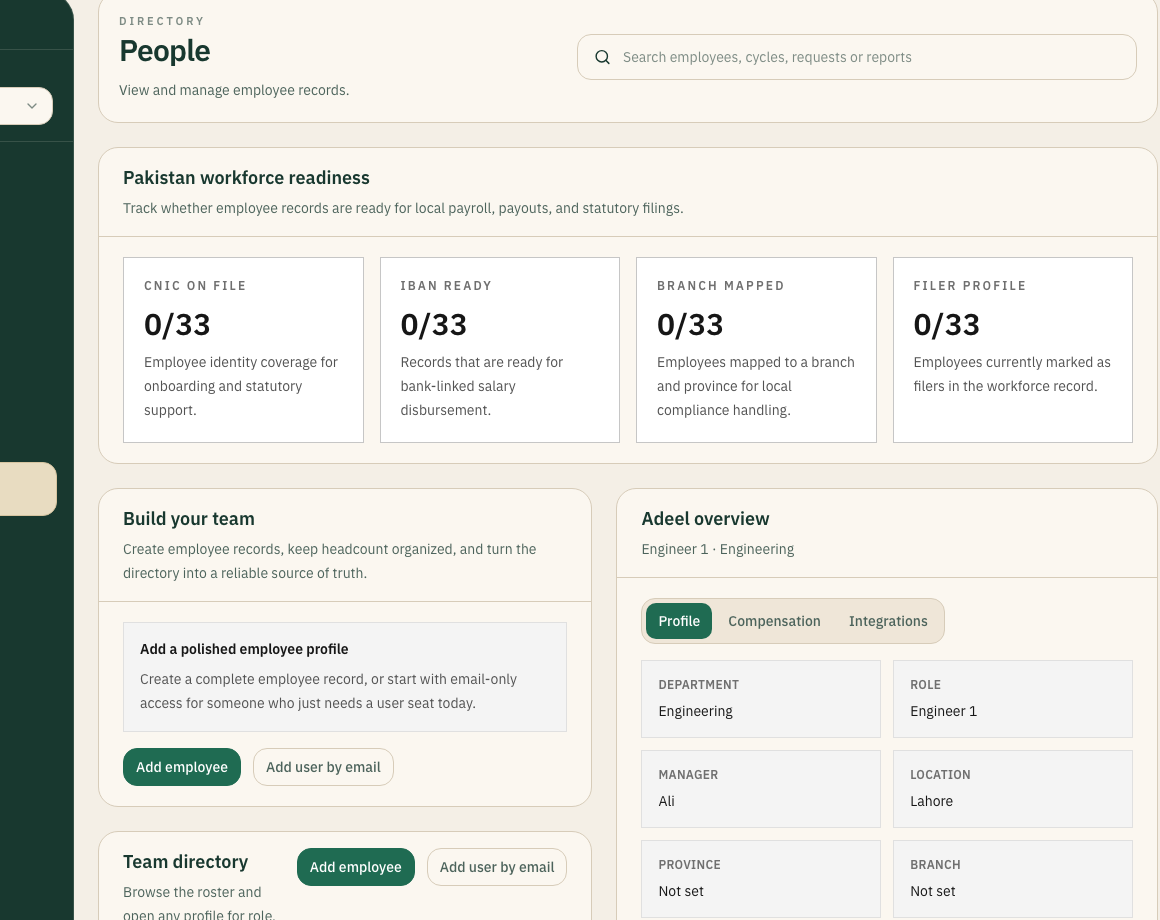
Structured employee operations without enterprise bloat
Services teams can standardize records and workflows without adding a heavyweight stack that still leaves ops fragmented.
4
Sequenced steps
3
Expected outcomes
Industry
Services companies often outgrow spreadsheets before they outgrow operational complexity. That is where NxtGenSoftware fits.
4
Operating steps
3
Expected outcomes

Services teams can standardize records and workflows without adding a heavyweight stack that still leaves ops fragmented.
4
Sequenced steps
3
Expected outcomes
Best suited for
Support growing services teams with cleaner records, approvals, and reporting discipline.
The operational problem
Services companies scale through people. When onboarding, approvals, expenses, and employee records are split across tools, managers lose visibility and HR becomes a bottleneck for routine execution.
Next move
If this route matches the problem your team is trying to solve, the next useful step is a focused conversation about rollout scope and operating fit.
ContinueScroll through the route
NxtGenSoftware creates a disciplined people operations layer for services teams. It helps HR standardize lifecycle work while giving managers enough visibility to own their part of the process.
Services fit
Scroll story stage


Industry
4
Operating steps
3
Expected outcomes
01 / Industry
Turn employee records, onboarding, and approvals into a more durable operating model.
Manager and department ownership
02 / Industry
Create better visibility into workforce pressure and operational backlog using the same system the team already works in.
Document and onboarding state
03 / Industry
A more disciplined operating layer reduces ad hoc coordination and follow-up work.
Approval queues
Workflow
01
Create a structured employee record before onboarding work begins.
02
Track documents, manager assignments, approvals, and readiness state.
03
Route expenses, leave, and lifecycle requests into owned queues.
04
Monitor execution quality as teams and service lines grow.
Move the conversation forward
The useful next step is not another feature list. It is a concrete conversation about data quality, queue ownership, rollout boundaries, and the workflow that needs to go live first.