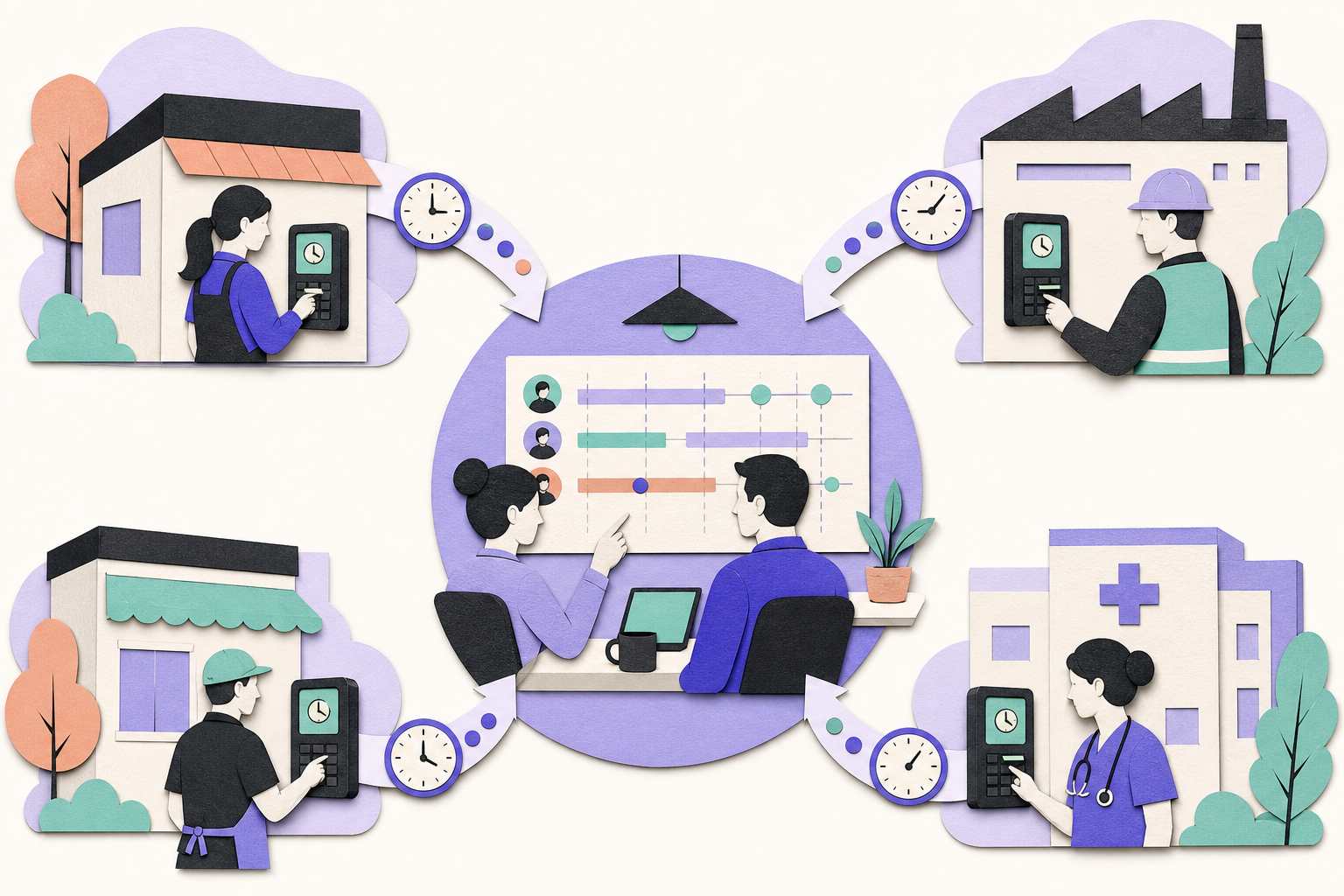
Good rollout starts with a better operating model
The guides are meant to help teams structure their operating approach before implementation.
4
Sequenced steps
3
Expected outcomes
Resource
Use these guides to think through rollout, process design, and system selection.
4
Operating steps
3
Expected outcomes

The guides are meant to help teams structure their operating approach before implementation.
4
Sequenced steps
3
Expected outcomes
Best suited for
Practical guides for workforce records, readiness, and attendance rollout.
The operational problem
Teams evaluating HRMS often start with feature lists instead of operating requirements. That leads to software that looks complete but fails during rollout.
Next move
If this route matches the problem your team is trying to solve, the next useful step is a focused conversation about rollout scope and operating fit.
ContinueScroll through the route
The guides help buyers define the workforce operating model first: what data matters, who owns exceptions, how attendance is validated, and what payroll needs before cut-off.
Resource
Scroll story stage


Resource
4
Operating steps
3
Expected outcomes
01 / Resource
What a useful employee directory should actually contain for operational teams.
Evaluation checklist
02 / Resource
How to stage terminals, employee-code mapping, and punch validation more reliably.
Rollout planning questions
03 / Resource
How to surface data gaps before payroll or compliance work gets delayed.
Readiness model
Workflow
01
Map the current workforce process from employee creation to payroll handoff.
02
Identify the records, devices, approvals, and exceptions that create risk.
03
Define rollout phases and success criteria before implementation starts.
04
Use the product walkthrough to validate the model against real workflows.
Move the conversation forward
The useful next step is not another feature list. It is a concrete conversation about data quality, queue ownership, rollout boundaries, and the workflow that needs to go live first.