Approvals work better when they live in a queue
Visible backlog and queue state make it much easier for teams to decide what needs attention first.
4
Sequenced steps
3
Expected outcomes
Use case
Approval work tends to slow down when it depends on inboxes, messages, and informal follow-up.
4
Operating steps
3
Expected outcomes

Visible backlog and queue state make it much easier for teams to decide what needs attention first.
4
Sequenced steps
3
Expected outcomes
Best suited for
Turn scattered approvals into a visible operating queue.
The operational problem
Approval delays are not just slow decisions. They create payroll uncertainty, employee frustration, and poor visibility into what managers still need to act on.
Next move
If this route matches the problem your team is trying to solve, the next useful step is a focused conversation about rollout scope and operating fit.
ContinueScroll through the route
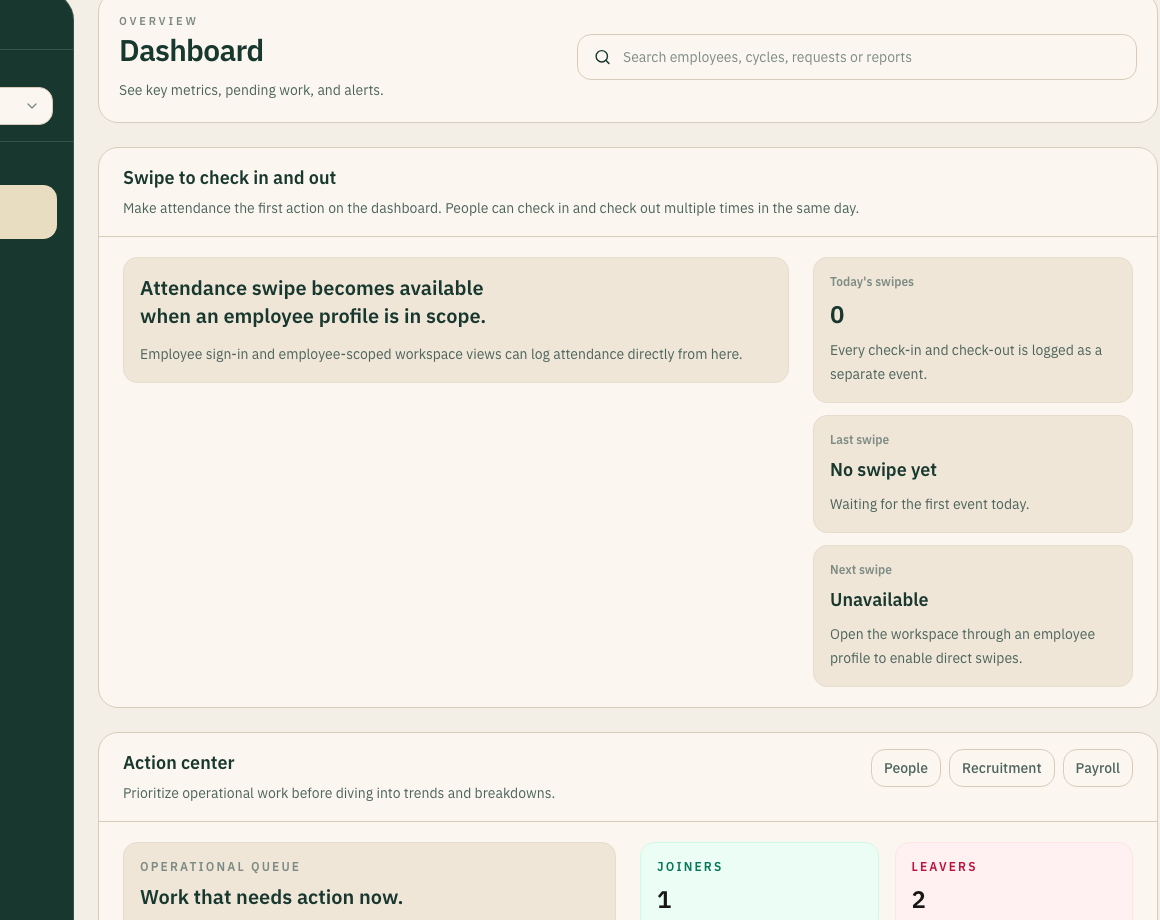
NxtGenSoftware makes approval work visible as a queue. Leave, expenses, lifecycle actions, and operational requests are easier to prioritize when ownership and status are explicit.
Use case
Scroll story stage


Use case
4
Operating steps
3
Expected outcomes
01 / Use case
Keep approvals and follow-ups in one place so the backlog is always visible.
Approval owner and status
02 / Use case
A single operating queue means fewer jumps across tools to understand what is blocked.
Queue visibility
03 / Use case
Managers and admins can act faster when the work is structured and legible.
Workflow category and context
Workflow
01
Route requests to the right owner based on employee, branch, manager, or workflow type.
02
Expose pending approvals before they block payroll or employee action.
03
Escalate or reassign stuck work with clear context.
04
Use reporting to identify teams or processes that slow execution down.
Move the conversation forward
The useful next step is not another feature list. It is a concrete conversation about data quality, queue ownership, rollout boundaries, and the workflow that needs to go live first.